

Energy saving
Energy-efficient and sustainable
production in textile finishing
Exhaust air treatment
The perfect environmental strategy
Using residual heat from exhaust air to heat fresh air saves energy, reduces CO₂ emissions and is a central element of sustainable production processes. Monforts offers a wide range of heat recovery systems with high savings potential – individually configurable to your requirements.
Issues such as exhaust air cleaning and, where necessary, odour elimination are also becoming more and more important. Many countries have legally defined emission limits that must be observed and which are regularly monitored.
With Monforts’ modular exhaust air cleaning solutions, you are on the safe side. Whether electric filters, UV elements or exhaust air scrubbers – we deliver customised concepts tailored to your processes and environmental goals.
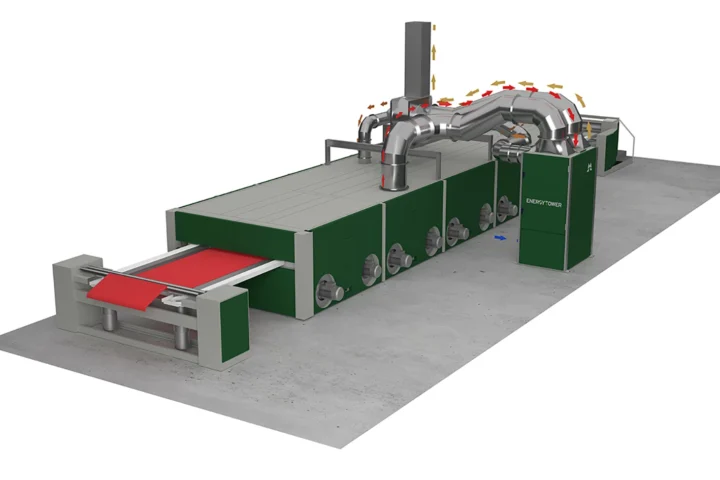
Energy Tower
Stand-alone module for heat recovery
The free-standing Energy Tower air-to-air heat exchanger enables efficient heat recovery from the exhaust air flow of heat treatment ranges. Thanks to individual installation and modular connection options for exhaust air and fresh air, the system can be used flexibly and universally. Depending on the exhaust air volume and temperature, between 10% and 25% of the heat can be recovered, significantly reducing production costs.
The Energy Tower is equipped with a variable-speed fan, soundproofed air intake and a generously dimensioned condensate collection tank. It also has a display showing the temperatures in real-time for exhaust air, fresh air and preheated air, as well as the respective maintenance intervals.
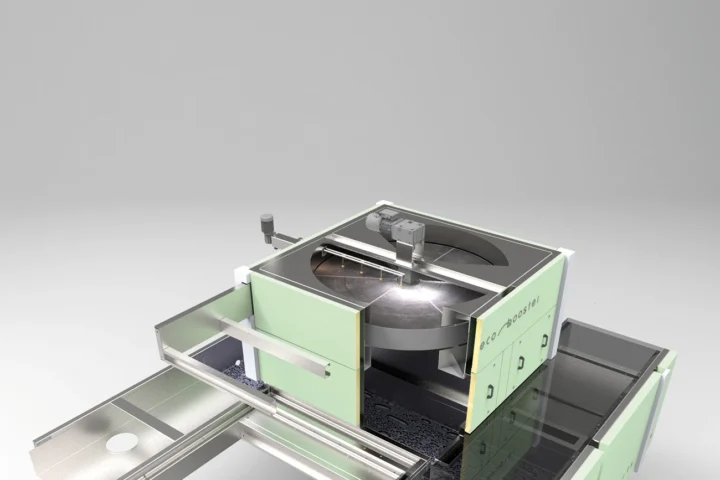
EcoBooster
Heat recovery with automatic cleaning
With the EcoBooster, you are opting for a modern heat recovery system with automatic cleaning, fully integrated into the chamber design of the MONTEX stenter. For ranges with up to eight fields, a single EcoBooster module is sufficient. Depending on the process, this can save up to 35% in energy costs.*
The EcoBooster consumes only minimal amounts of water during the automated cleaning cycle. All control and monitoring functions are conveniently carried out via the QUALITEX HMI.
Depending on the model, retrofitting is also possible on existing Monforts stenters.
* Basis for calculation: 8-field stenter, nominal width 200 cm, 150 g woven fabric, fixing process, 6000 operating hours per year.
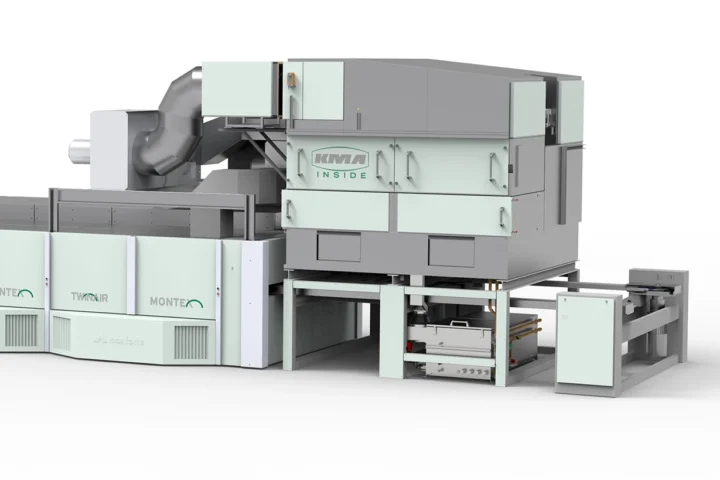
MonforClean
Modular, compact design
With the modular expansion possibilities of the MonforClean system, you are ideally equipped to meet increasing demands for heat recovery, exhaust air cleaning and odour elimination. Grow with your needs – and expand your system when your process calls for it. Monforts offers you maximum flexibility for that.
Integrated cross-flow heat exchangers (air/air or air/water) are used, with optional electric filters with fully automatic cleaning and a UV light module for odour elimination.
A further benefit: the CO₂ emissions of your range are further reduced – a concrete contribution to greater sustainability in textile finishing.
Hybrid heating
Combining energy sources
Alternative heating systems and hybrid heating concepts allow you to remain flexible – even in the event of energy supply bottlenecks – and ensure your production capacity in the long term.
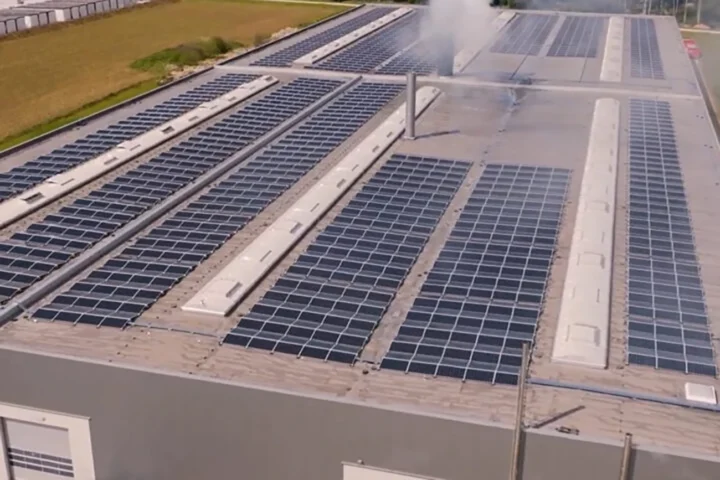
Monforts as part of sustainable industry initiatives
A key goal of our sustainability strategy is to reduce our CO₂ emissions by up to 50% by 2030 – for a future worth living and to protect future generations.
Future-proof heating options
WasserSTOFF research project
With the government-funded WasserSTOFF research project, Monforts is actively preparing for future forms of energy – another step towards climate-friendly textile finishing.
VDMA sustainability initiative
Member of the Blue Competence Alliance
Monforts is a partner of the VDMA Blue Competence initiative, which promotes sustainable thinking and action in machine and plant engineering while also highlighting innovative solutions in the industry. Through our partnership, we are committed to the 12 sustainability principles of machine engineering and take responsibility for a sustainable industry.